
Most boys aren't closed. The setting's just wrong.
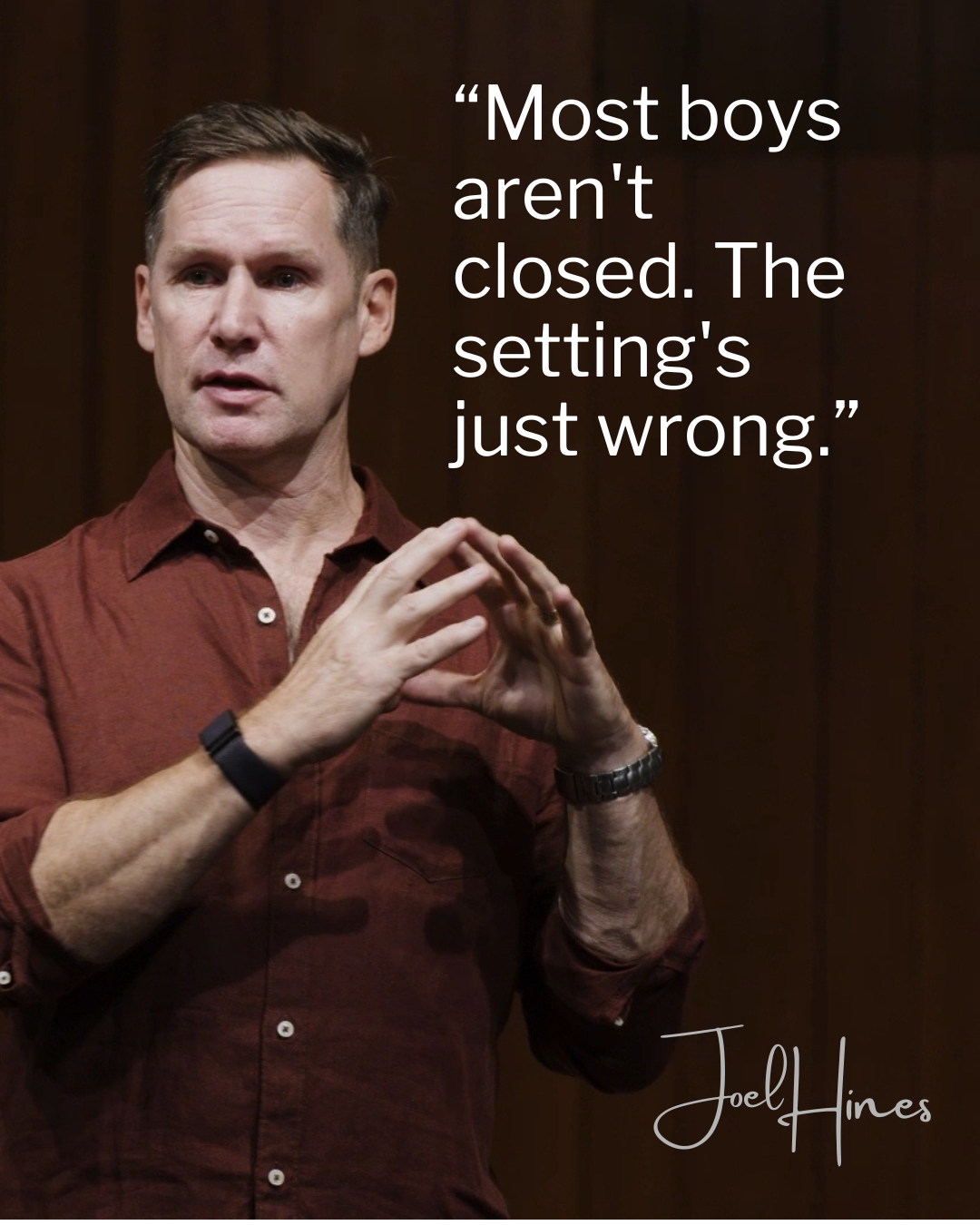
Here's the thing I keep coming back to after years of working with boys: most of them aren't closed. The setting's just wrong.
We've inherited an idea that a "real" conversation means sitting a child down, face to face, eye to eye, and talking it through. For a lot of boys, that setup does the opposite of what we want. Direct, sustained eye contact can read as pressure, even as a low-grade threat, and a brain that feels under threat isn't a brain that opens up. So the talk stalls, everyone feels it, and the story hardens into "he doesn't tell me anything."
What I teach instead is what I call "staying in the conversation" and it's less about engineering one big talk than about being available for a hundred small ones. Boys tend to open up when side by side: in the car, on a walk, shoulder to shoulder over a job, in the gap between two other things. The connection happens alongside the activity.
The reframe matters because it takes the pressure off everyone. The parent isn't failing. The boy isn't broken. The format just needs to be turned ninety degrees.
Parenting expert Maggie Dent suggests that many boys find direct eye contact confronting, and that pairing a serious chat with movement, like a walk or shooting hoops, helps them feel safe enough to actually hear you. Michael Grose describes the same instinct as side-by-side, activity-based communication.
When experienced voices land independently on the same idea, it's a fair sign it's worth passing on.
Next time you want to build connection or even have a conversation with a teenage boy, consider doing something else at the same time or at the very least, being side by side rather than a formal face to face chat.