
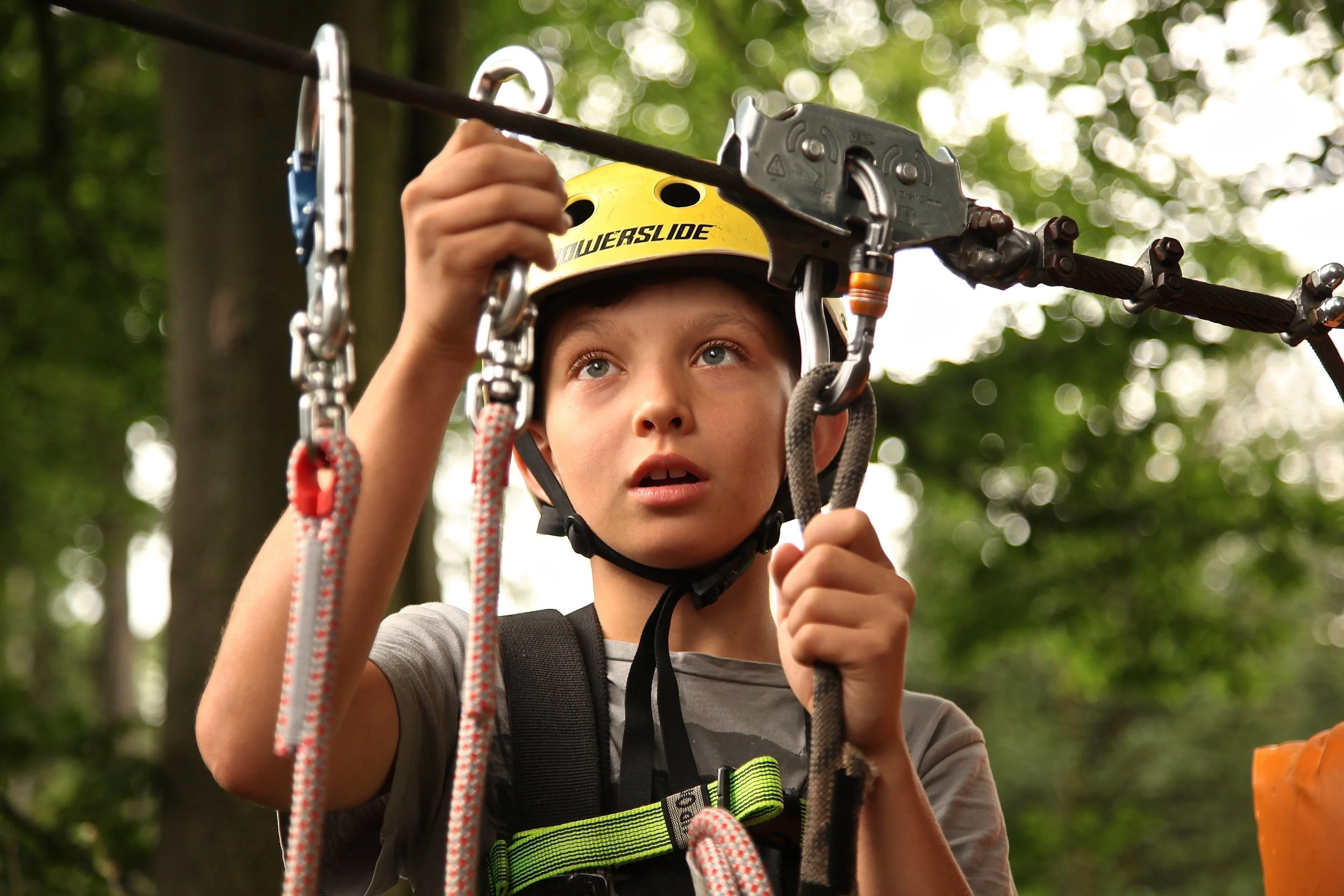
We've done an extraordinary job of making childhood safer. Fewer broken arms, fewer close calls, fewer moments where things could go badly wrong.
But somewhere along the way, in removing the risk, we've also removed a lot of the challenge, and boys still need challenge to grow.
Teenage boys in particular are always looking for their edge, the boundary they can push up against. If we don't offer them healthy ways to find it, they'll go looking for it themselves…
...often online,
...often with mates,
...and often in places we'd rather they didn't.
So the question isn't really whether our sons will seek out challenge. It's whether we'll help them find the kind that builds them up.
One idea I come back to again and again with parents is the difference between three zones. Let me explain...
The Comfort Zone is familiar and easy, with no challenge, and so no growth. The Challenge Zone is where a boy is stretched but not broken. It's uncomfortable, uncertain, maybe a bit scary, and it's where learning actually happens.
The Growth Zone is where the learning happens, but in order to get from Comfort to Growth, we have to face some sort of challenge; we may even need to fail or make a mistake for the learning to occur.
The Danger Zone is where the challenge genuinely exceeds his capacity to cope, and that's where he needs us to step in.
The trap so many loving parents fall into (and I've fallen into it plenty with my own son) is confusing the Challenge Zone with the Danger Zone.
We see him struggling, our stomach drops, and we rush to rescue. But most of the time, he isn't in danger. He's exactly where he's supposed to be.
I'll never forget sitting with a group of teenage boys when one young man said something that has stayed with me ever since:
"Every time I face a challenge and get through it, I build resilience. Next time I face something hard, I can remind myself I did that thing before, I can probably do this."
That's the gift.
Resilience isn't something we can explain to a boy or hand to him. He earns it, one manageable struggle at a time.
Healthy challenge can look like catching the train into the city on his own, cooking dinner for the family one night a week, ringing to book his own haircut, taking on a part-time job, finishing a long hike when he wants to quit, or having to sort out a falling out with a mate without you smoothing it over.
None of these are dramatic.
All of them say, "I believe you can handle this."
This is where the Refrain part of my THRIVE framework comes in. Refraining from fixing doesn't mean never helping. It means pausing long enough to work out which zone he's really in.
Step back when he's frustrated but safe, when the consequences are a manageable life lesson, and when he hasn't asked for help.
Step in when there's genuine physical, mental or emotional risk, when the consequences would be wildly out of proportion to the lesson, or when he's showing signs he's not coping.
The most useful question to ask yourself is this one: "Is my urge to fix this about his actual need, or about my own discomfort watching him struggle?"
When you do choose to hold back, try one of these instead of the rescue:
"That sounds really tough. What are you thinking of trying?"
"What's worked for you before when something felt this hard?"
"I'm here if you want a sounding board, but I reckon you've got this."
Just like a lighthouse, our role as a parent is to highlight the dangers; your son’s role is to steer the ship himself and learn from the experience.